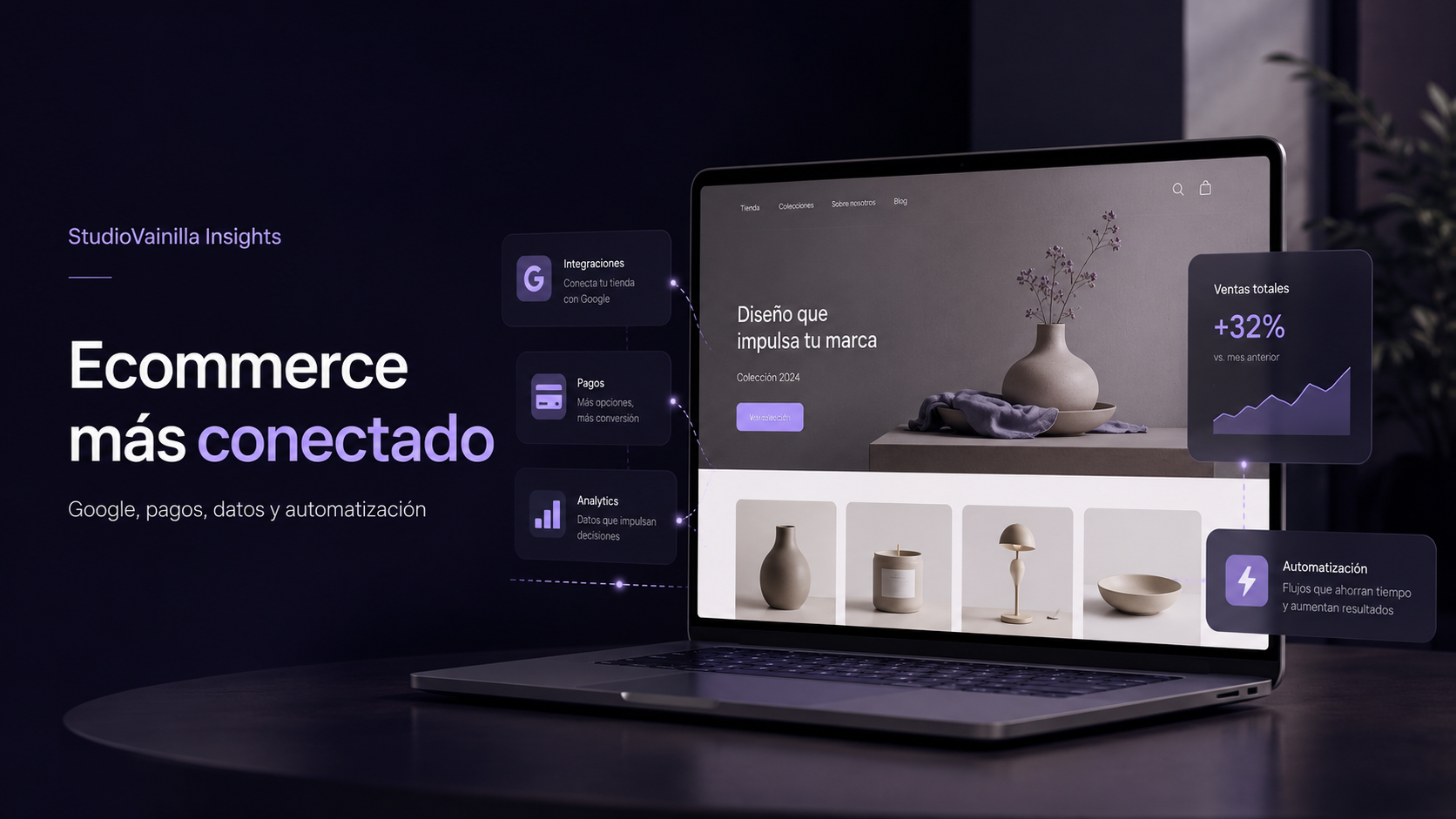
E-commerce with WooCommerce It is entering a more advanced stage. Selling online is no longer just about having a store with products uploaded, visible prices, and a buy button. Today, a digital store needs to connect with ads, artificial intelligence, payments, data, automation, and tools that help better understand how customers buy.
In a recent communication from Woo, the platform introduced new features focused on strengthening online store operations: new functions of Google for WooCommerce, integration with YouTube Shopping, asset creation for Google AI ads, improvements for Performance Max campaigns, international payment options with Stripe, and tools for visualizing where customers buy.
It's not about having an e-commerce store. It's about having a digital infrastructure ready to sell.
WooCommerce aims for a more connected e-commerce
For years, many companies understood e-commerce as a page where they could upload products and receive orders. That vision is already falling short.
Woo's new features show a clear trend: digital commerce needs to integrate with tools that help attract traffic, improve the shopping experience, facilitate payments, measure results, and make better decisions.
In other words, an online store should no longer live in isolation. It must be part of a broader digital operation.
Google, AI, and Ads Ready to Sell
One of the most relevant points of the announcement is the evolution of Google for WooCommerce. According to Woo's communication, in addition to synchronizing the product feed, businesses can now create ad-ready assets with Google AI, connect with YouTube Shopping, and run Performance Max campaigns for service-based businesses, even without a traditional product catalog.
This is important because it confirms something that many brands still haven't understood: e-commerce not only needs a functional store, but it also needs to be prepared for customer acquisition.
The store no longer ends on the website
A modern digital store must be able to connect with the channels where people discover, compare, and decide. Google, YouTube, social media, search engines, automated campaigns, and marketplaces are all part of the same ecosystem.
- Google: To improve visibility and connect products or services with real searches.
- Google AI to create advertising materials faster and tailored to campaigns.
- YouTube Shopping To connect content, video, and shopping.
- Performance Max: to expand campaign presence across different Google spaces.
An online store without an attraction strategy is just a shop window waiting for someone to walk by.
Stripe and international payments
Another relevant novelty is the presence of Stripe as a featured integration within the Woo marketplace. The email mentions the possibility of selling internationally with localized checkout pricing, displaying prices converted into the buyer's local currency.
This point is especially important for businesses looking to scale beyond their city or country. The payment experience can be one of the main points of friction in a digital purchase. If the user doesn't understand the price, doesn't trust the process, or can't pay easily, the sale can be lost.
Less friction, more conversion possibility
Payments are not a technical detail. They are part of the business experience. A well-built e-commerce platform must consider payment methods, currency, pricing clarity, security, confirmations, transactional emails, and post-purchase tracking.
- Clear prices.
- Checkout simple.
- Reliable payment options.
- Safe user experience.
- Automatic confirmations.
- Processes ready to grow.
Customer Reach Map: data to understand where your customers buy from
Woo also presented a tool called Customer Reach Map, focused on visualizing order locations, identifying top-performing regions, and understanding a store's commercial footprint.
This directly connects to one of the most important needs of any business: stop selling blind.
When a company knows where its customers buy from, which regions perform best, which products sell well, and which areas have the greatest potential, it can make better decisions regarding marketing, logistics, advertising, and expansion.
Data does not replace strategy. It makes it more precise.
WooCommerce 10.8 and the importance of a well-optimized store
The email also mentions improvements in WooCommerce 10.8, including advancements in the block email editor, unique coupon generation, live order data usage, and database query reductions to improve performance on product, cart, and checkout pages.
Although these points may sound technical, they have a direct impact on the business. A slow, cluttered, or poorly configured store can lose sales even if it has good design or good products.
Performance also sells
Speed, stability, and clarity of the purchasing process influence user trust. If the page takes too long, if the cart fails, if the checkout isn't clear, or if emails don't arrive correctly, the experience breaks down.
Therefore, developing an e-commerce store should not be seen as “installing WooCommerce and uploading products.” It should be seen as building a business infrastructure.
What does this mean for businesses
These WooCommerce updates reinforce a key idea: modern e-commerce demands more strategy, more integration, and more structure.
A business that wants to sell online needs to think about the entire system, not just the storefront visible to the customer.
- Design A clear, reliable, and brand-aligned visual experience.
- Development A stable, fast, and growing-ready store.
- Marketing: connection with campaigns, search engines, and attraction channels.
- Payments simple, safe, and client-tailored methods.
- Data: Sales, regions, products, and behavior measurement.
- Automation emails, coupons, tracking, inventory, and support.
How does this connect with StudioVanilla
At StudioVainilla, we understand e-commerce as part of a complete digital structure. It's not just about creating a beautiful store, but about building a platform that helps businesses sell better, operate more clearly, and make better decisions.
From Web Development and Web Services, We help companies build online stores ready to integrate with tools such as WooCommerce, Google, Stripe, digital campaigns, automation, analytics, and tracking systems.
We also connect this work with Digital Marketing, because a store without a strategy for attraction, measurement, and conversion can fall short of its true potential.
Selling online isn't improvising a store. It's building a digital operation.
What should a company check before launching its e-commerce site
Before creating an online store, a company should review whether its business and operational structure is clear. Technology can help a lot, but it works best when the business is well-organized.
- What products or services will be sold online.
- How will the categories be organized?.
- What payment methods will be used.
- How will shipments, deliveries, or availability be calculated?.
- What campaigns will drive traffic to the store.
- How will clients and orders be followed up on?.
- What data will be measured to improve decisions?.
Conclusion
WooCommerce's new features show where digital commerce is heading: more connected, smarter stores that are better prepared to integrate with advertising, payments, data, and automation.
For businesses, the message is clear. Having an e-commerce presence should no longer simply mean having a website to sell. It should mean having a digital structure capable of attracting customers, facilitating purchases, measuring results, and scaling in an organized manner.
It's not about having an e-commerce store. It's about having a digital infrastructure ready to sell.
Source: Woo Informational Communication · May 2026.
StudioVainilla Insights is our editorial radar on marketing, technology, e-commerce, artificial intelligence, data, and digital systems applied to business growth. You can consult more publications at StudioVainilla Insights.
Schedule a free consultation with StudioVainilla to review how your business can build an online store that is ready to sell, operate, and grow with greater clarity.